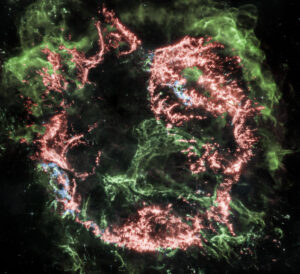
Final Hours: Cassiopeia A Dust Records a Star Stirring Its Layers
Webb’s sharp mid-infrared view of the Cassiopeia A supernova remnant suggests the doomed star’s inner burning layers merged in the hours before it exploded.

Webb’s sharp mid-infrared view of the Cassiopeia A supernova remnant suggests the doomed star’s inner burning layers merged in the hours before it exploded.
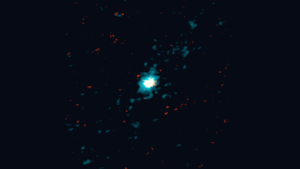
ALMA has weighed a black hole seen 1.3 billion years after the Big Bang directly, from the way its gravity stirs the surrounding gas. The 6.5 billion solar mass result offers a rare check on the shortcuts astronomers usually rely on.
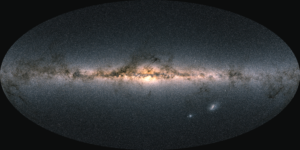
A new Milky Way simulation follows 5.4 trillion particles, fine enough to track individual stars, by letting AI predict how gas spreads after each supernova.
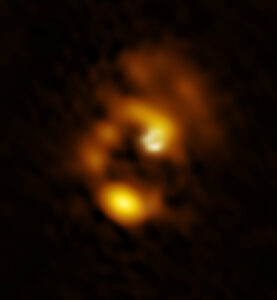
ALMA observations of the red giant Mira reveal a magnetically driven eruption that flung a vast loop of gas into space, challenging the idea that starlight on dust alone powers the winds of ageing stars.