

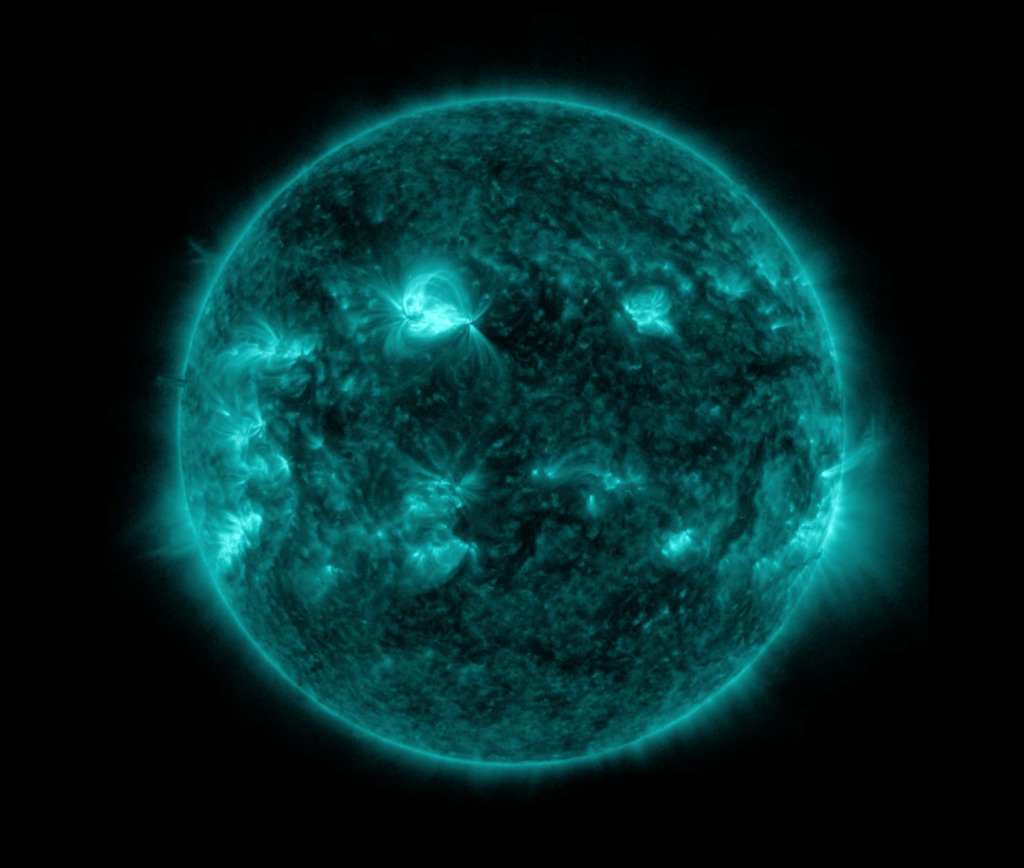
Catching a solar flare with a rocket is like photographing lightning with a camera that takes a minute to switch on. Large flares can be over in as little as 15 minutes, and a sounding rocket, a small suborbital rocket that climbs above the atmosphere and falls back, gets only about five minutes of viewing time. A new solar flare alert, described in a paper published on 4 November 2026 in The Astrophysical Journal, aims to take some of the guesswork out of when to press the button.
NASA announced the work on the same day. Ordinary flare warnings say that a flare has started. They do not say whether it will still be burning by the time a rocket reaches space, which is the only question a launch team cares about. The new system pinpoints where on the Sun a flare is erupting and forecasts how long it will last, within minutes of spacecraft first spotting it.
It reads X-ray and ultraviolet light from active regions, the magnetically tangled patches of the Sun where flares are born. The data come from NASA’s Solar Dynamics Observatory (SDO), NOAA’s GOES weather satellites and observatories on the ground. The margins are thin. For the FOXSI rockets, a launch needed a three-minute countdown and then roughly a minute’s climb to space, according to the team at UC Berkeley. A flare has to outlive the decision by four minutes just to be seen.
The approach has already flown. In April 2024 it helped coordinate two rockets from Poker Flat Research Range in Alaska: FOXSI-4, which images the Sun in high-energy X-rays, and its sister payload Hi-C FLARE, which followed one minute later to watch the same flare in extreme ultraviolet light. NASA describes this as the first time its sounding rockets studied a flare in progress. Such flights matter because Earth’s atmosphere absorbs much of a flare’s light, and rockets are a quick, cheap way to get above it.
Prediction is not the same as luck. An enhanced version of the alert guided the FOXSI-5 launch on 14 May 2026, yet the rocket, built to catch a large flare, imaged three small ones instead. NASA’s account also gives no headline accuracy figure, so how often the forecast gets it right is still an open question. The team is refining the system under a NASA Early Career Investigator Program grant.
If it matures, the same few minutes of warning could help space weather forecasters and solar observatories as well as rocket crews. For now its job is simpler. It tells a team waiting on an Alaskan launch pad whether the Sun’s latest outburst will still be there when they arrive.
