

Feeding a crew on the Moon is a freight problem before it is a farming one. Every meal for a long stay has to be launched, landed and stored, and a permanent base multiplies that bill by years. Growing food on site is the obvious answer, but lunar soil is a poor place to start: it is crushed rock and glass with no organic matter and no nitrogen. A new study suggests potatoes can still complete their full life cycle in simulated moon soil, provided the dirt gets a generous helping of worm compost.
The work, led by David Handy and Aymeric Goyer at Oregon State University and funded by NASA, was published on 19 November 2026 in npj Microgravity. The team grew Modoc, a red-skinned potato picked for its high yield and early maturity, in five regolith simulants: manufactured powders that mimic the loose rubble covering the Moon. Two copy the dark volcanic plains known as maria. Three copy the older, paler highlands, including one formulated to resemble ground near the lunar south pole, where NASA hopes to land crews. As an Earth benchmark, the researchers used sandy soil from Hermiston, Oregon, a district known for some of the highest potato yields in the world.
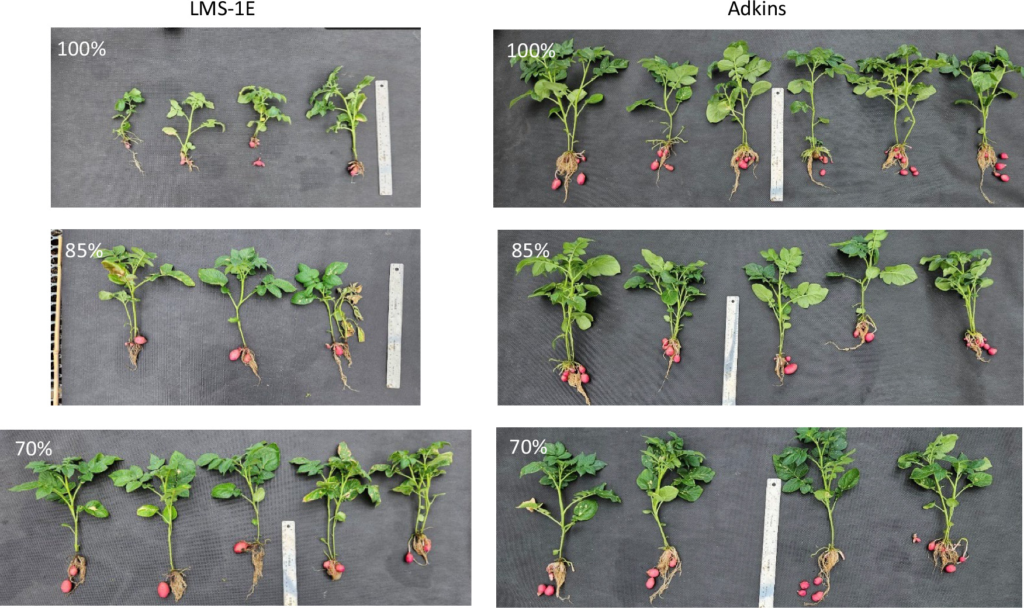
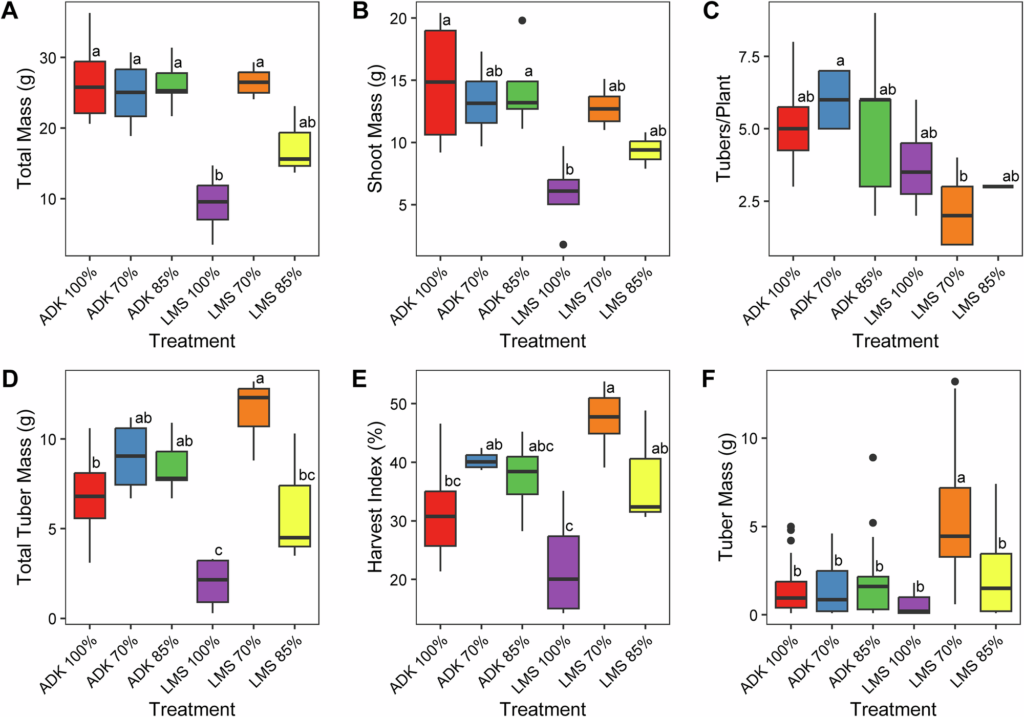
First came the question of how much help the regolith needs. Plants went into small pots holding about 300 cubic centimetres of a mare simulant mixed with 0, 15 or 30 per cent vermicompost, the dark, crumbly material earthworms make from food and plant waste. In pure simulant the plants were badly stunted, and roots from three of the four plants weighed less than 0.01 grams, below what could be measured. At 15 per cent compost, growth recovered partway. At 30 per cent, the plants were comparable to those in Oregon soil on most measures, and some produced as much tuber mass as the Earth controls.
Why the compost works is partly a chemistry question. Leaves from plants in unamended simulant carried markedly more copper than any other group, and stunting with stubby roots is a classic sign of copper excess. The simulant itself held about 18 milligrams of copper per kilogram. The authors suggest organic matter gives copper something else to bind to, keeping it away from roots. As Handy put it in the university’s release, the compost “helps balance some of the toxicity we see in lunar regolith”.
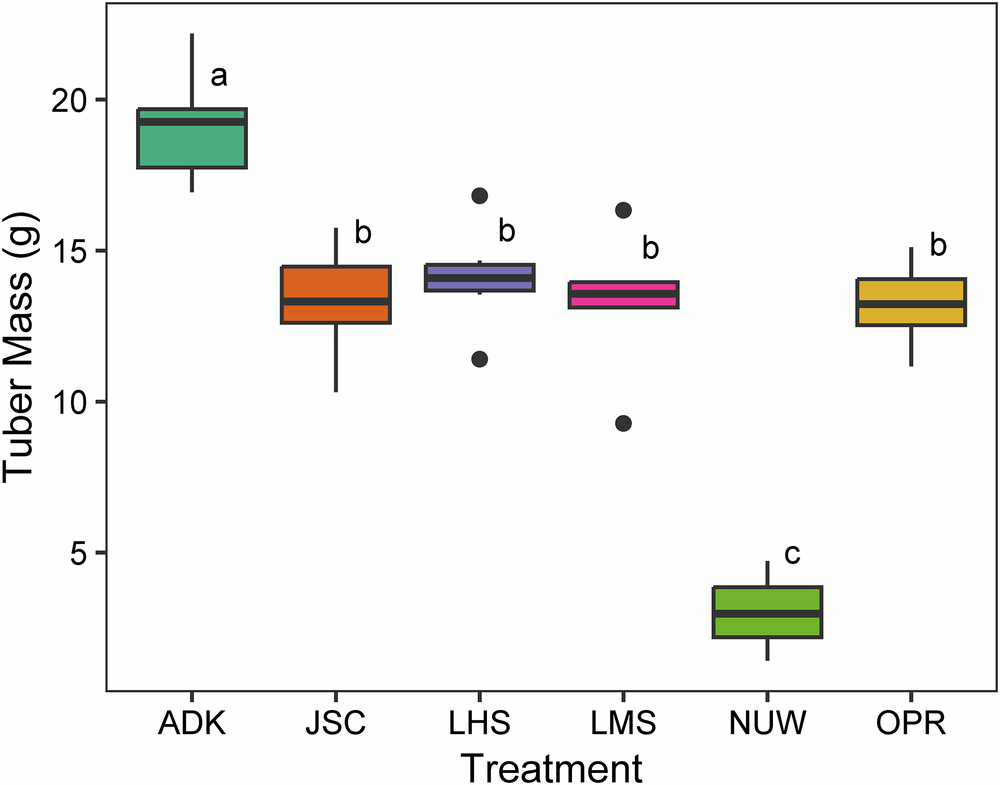
A second experiment turned the screw. Every simulant got just 5 per cent compost, enough to produce tubers but low enough to keep the plants under stress. All five reduced tuber yield compared with Oregon soil, and the simulants were far from interchangeable. One highland mix, NUW-LHT-5M, was the harshest: shoots took about 24 days to emerge, against four to eight days elsewhere, and only three of five plants produced tubers. The authors point to compaction, cementing after watering and sharp glassy particles as possible culprits.
Reading the genes switched on in the leaves told the same story in finer detail. Compared with Earth-grown plants, potatoes in the mare simulant LMS-1E changed the activity of 1,397 genes, while those in the south pole highland mix shifted just 124. Each simulant produced its own pattern. Lunar soil stress, in other words, is not one thing, and a crew farming the maria may face different problems from one farming near the poles.
Inside the tubers, the news is better. Their chemistry barely moved. Of seven compounds the team measured directly, including vitamin C, six showed no significant change, and that included solanine and chaconine, the natural toxins that build up in stressed potatoes and are linked to green patches beneath the skin. Copper and zinc rose slightly in tubers from some simulants, as did aluminium in those from highland mixes, which the authors flag for monitoring rather than alarm. Potatoes were chosen because they deliver more calories per unit of land than most crops. A potato that grows but cannot be eaten safely is no use to anyone.
The catch is that this was a greenhouse in Oregon, not a base on the Moon. Simulants are approximations, and a 2022 study that grew thale cress in real Apollo samples found plants responded very differently to genuine regolith than to a common simulant. Every pot also received slow-release fertiliser, because the simulants contain no nitrogen and compost alone cannot supply enough; on the Moon that nitrogen would have to come from somewhere. The pots were small, the gravity was Earth’s, and lunar radiation and the long lunar night were absent. Compost at 30 per cent is also a lot of organic matter to start a farm with, though the team argues a small starter supply could be expanded by composting food scraps and crop waste.
A follow-up paper will compare 10 potato varieties to find the hardiest. That is how farming has always advanced: one cultivar and one season at a time. The difference is that the first lunar field may be fertilised with the crew’s leftovers, worked by worms that never asked to travel, and planted in dust that was never meant to grow anything at all.
