

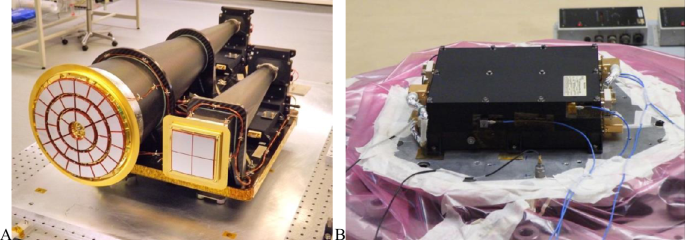
Mercury is the hardest planet in the inner Solar System to read chemically. It sits so deep in the Sun’s gravity well that reaching orbit takes years of braking, and the only spacecraft to orbit it so far, NASA’s MESSENGER, could map the make-up of its rocks only across the northern hemisphere and only in patches 50 to 100 kilometres wide. The next attempt rests largely on one British-led instrument. This week its team showed that it survived the journey: the BepiColombo X-ray telescope has taken its first look at the sky, and it is seeing slightly more sharply than it did on the ground.
The instrument is the Mercury Imaging X-ray Spectrometer (MIXS), built by a European consortium led by the University of Leicester and carried on ESA’s Mercury Planetary Orbiter, one half of the joint ESA and JAXA BepiColombo mission. For most of the eight-year cruise it was blind, its view of space blocked by the Mercury Transfer Module, the propulsion stage that was jettisoned on 3 September. On 11 and 12 September the team pointed it at the Crab Nebula, the debris of a star that exploded about 6,500 light years away and a standard reference source for X-ray astronomers. Leicester released the results on 19 November, shortly before the spacecraft’s scheduled capture into Mercury orbit on 21 November.
Across 39 hours of observing and 55 separate slews of the spacecraft, the team built up an image of the nebula. Because the Crab’s X-ray output is so well characterised, the spread of its image across the detector reveals the telescope’s angular resolution, its ability to separate fine detail. It came out slightly better than the last laboratory measurement, made in 2015. Stray sunlight is not leaking into the images. According to principal investigator Emma Bunce, “the detector has suffered no radiation damage after 8 years in space”.
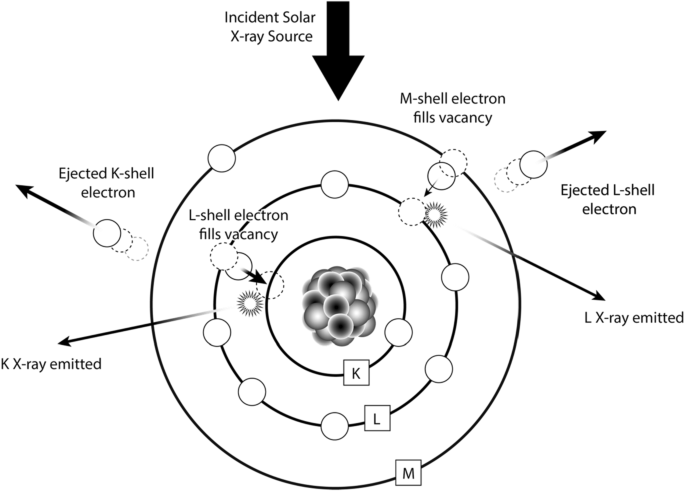
MIXS works by X-ray fluorescence. When X-rays from the Sun’s corona strike atoms in Mercury’s surface, those atoms re-emit X-rays at energies unique to each element, so the returning spectrum acts as a chemical fingerprint. It only samples the top 10 to 20 micrometres of the regolith, the loose, pulverised layer that coats the planet. That sounds shallow. Impacts keep churning the regolith, however, and MESSENGER showed that it tracks the bedrock beneath closely enough to map geology from orbit.
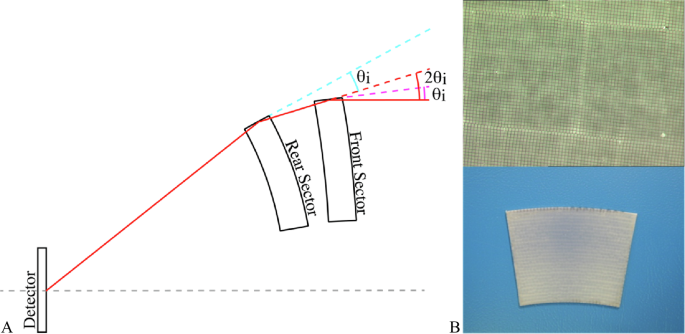
Two channels share the work. MIXS-C, a collimator with a field of view about 10 degrees across, will cover the whole planet at roughly MESSENGER’s resolution. MIXS-T is the true telescope, and the novel part. Its mirror is built from 72 plates of lead glass riddled with square pores 20 micrometres wide, which glance X-rays off their walls twice and bring them to a focus one metre away; conventional X-ray mirrors would have been far too heavy for an interplanetary probe. According to the instrument paper, MIXS-T should resolve features smaller than 10 kilometres when the Sun is active.
That detail matters because MESSENGER’s maps raised questions they could not settle. They showed sharp changes in composition at geological boundaries, such as the edges of the smooth plains that fill the Caloris basin. They also revealed a large northern region unusually rich in magnesium relative to silicon that no known surface feature explains. MIXS-T is designed to pick apart individual craters and impact basins, where collisions have dug up material from deep in the crust. Mapping those at fine scales could show how Mercury melted, separated into layers and erupted, and so test ideas about how a rocky planet forms this close to its star.
The result is a health check, not a discovery. The Crab is bright and steady; Mercury’s glow will be faint and will rise and fall with solar flares, so MIXS depends on a partner instrument, the Solar Intensity X-ray and particle Spectrometer (SIXS), to measure the incoming solar X-rays at the same moment. The team still has to filter out a background from galactic cosmic rays, the optic fluoresces faintly when sunlight falls on it, and some instrument effects are still being studied. The mirror’s inner ring also never received its iridium coating, which costs collecting area at higher energies and rules out sharp imaging of iron’s strongest X-ray lines. Capture is only the first step of a long arrival: the two orbiters separate on 9 and 10 December, and routine science is not due until April 2027.
There is a long human thread through all this. The optic was conceived by George Fraser, the instrument’s original principal investigator, who died in 2014, and instrument scientist Adrian Martindale first worked on MIXS as an undergraduate in 2003. The last time anyone looked through the telescope, it sat in a basement beneath Leicester’s physics department.
Its next target is not a distant nebula. It is the rocks of Mercury itself, glowing faintly in X-rays every time the Sun flares.
