

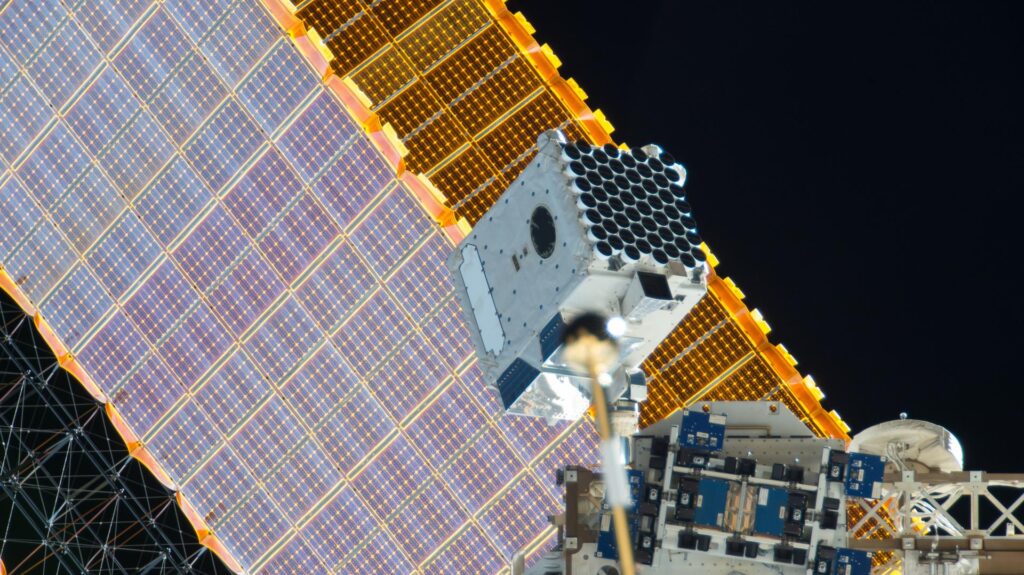
For eight years, an X-ray telescope about the size of a washing machine sat outside the International Space Station, timing the flicker of dead stars to better than 100 nanoseconds. That job is over. On 17 November 2026, NASA announced that its NICER telescope (Neutron star Interior Composition Explorer) has ended science operations after a motor failure left it unable to track targets.
The trouble began in June 2025, when NICER suddenly could not swivel side to side beyond its current orientation. Engineers used the station’s external cameras to rule out outside causes and now think an internal motor has failed. The team will finalise the eight-year archive, then decommission the telescope and detach it from the station.
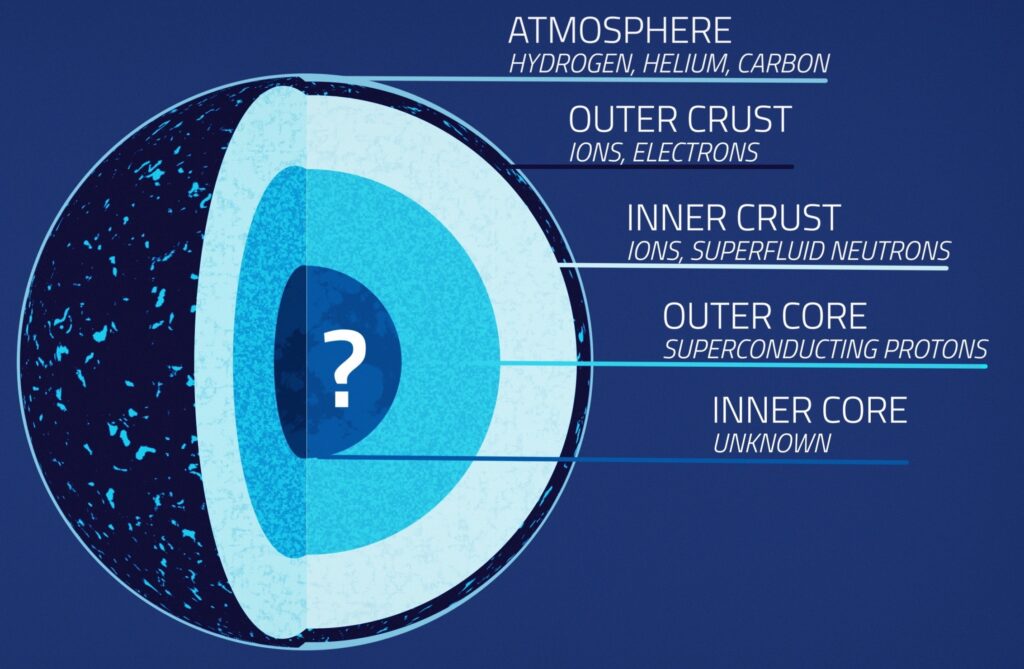
Its main legacy is neutron stars, the collapsed cores left when massive stars explode. NICER tracked hot spots rotating in and out of view; because a neutron star’s gravity bends light from its far side towards us, the shape of that flicker reveals how compact the star is. In 2021, teams using NICER data found that PSR J0740+6620, about 2.1 times the Sun’s mass, is roughly 25 to 27 kilometres across. That is much the same size as a lighter pulsar of about 1.4 solar masses, which counts against the most squeezable models of neutron star cores.
NICER also proved a navigation trick. In November 2017, an experiment called SEXTANT used four millisecond pulsars as natural clocks and, within eight hours, fixed the station’s position to within 16 kilometres (10 miles) while it travelled at more than 28,000 km/h. The same idea could one day guide spacecraft far beyond the reach of GPS.
The ending was not sudden. A sunlight leak through damaged thermal shields in 2023 had already needed a spacewalk repair in January 2025. Nor is the central question closed: whether a neutron star’s inner core stays neutrons all the way down, or breaks into free quarks, remains unsettled.
What survives is the archive, eight years of X-ray photons each stamped to a fraction of a microsecond. The telescope has stopped listening. The pulsars have not stopped ticking.
