

Euclid was built to photograph billions of distant galaxies, and it goes out of its way to avoid the Solar System. That makes its latest find a happy accident. The first Euclid comet discovery, now designated C/2026 S1 (Euclid), is faint, distant and steeply tilted, and it will not come close enough to put on a show.
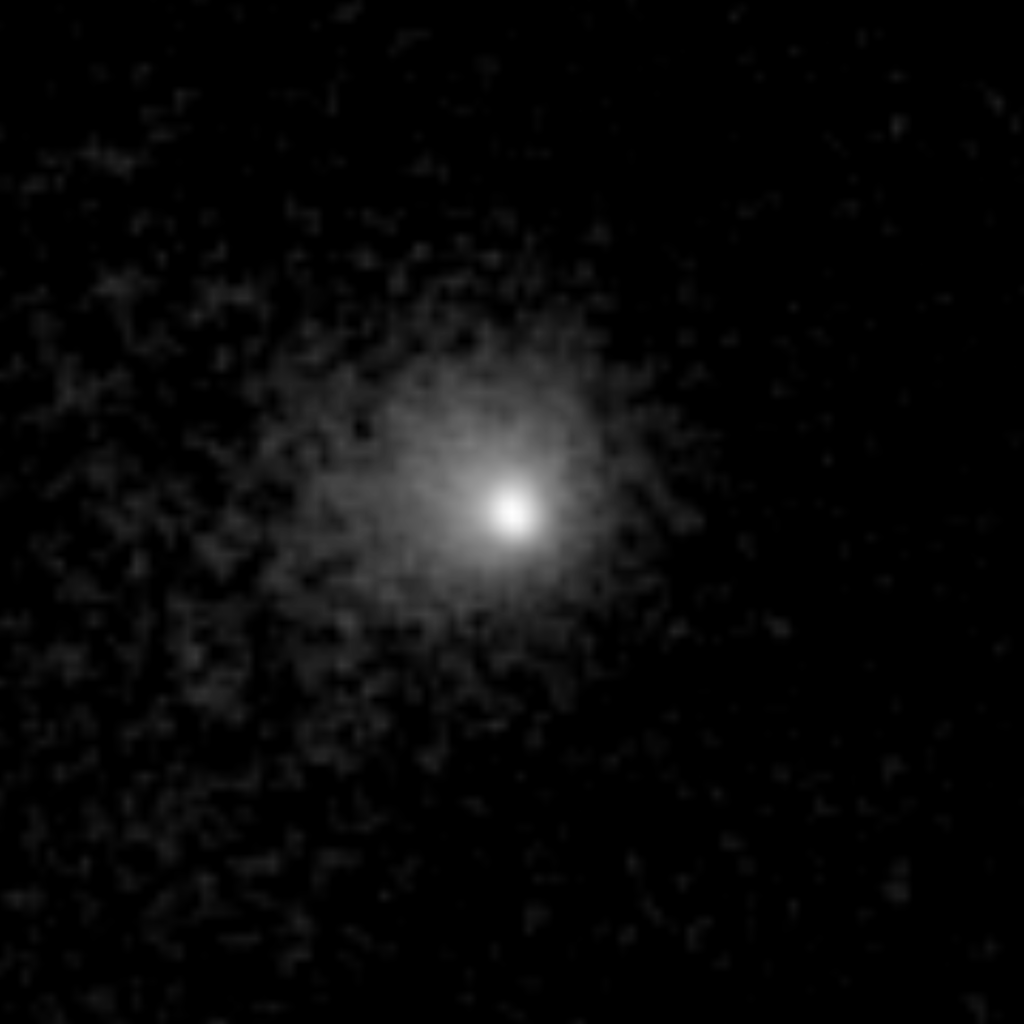
The European Space Agency (ESA) announced the discovery on 19 October 2026. Mikko Pöntinen, a PhD student at the University of Helsinki, spotted it with moving-object software he wrote for the Euclid Consortium’s Solar System team. The program flagged a streak in images of the Euclid Deep Field North taken between 16 and 24 September, and Pöntinen then tracked it through 16 exposures. A fuzzy cloud of dust and gas around it, the coma, marked it as an active comet.
Its orbit, published by the Minor Planet Center after it confirmed the comet on 8 October, is an odd one. Closest approach to the Sun comes on 2 September 2027 at roughly 1.3 billion km, a little inside the orbit of Saturn. The path is tilted about 85 degrees to the plane of the planets, so the comet is currently arching almost straight over the Solar System. At magnitude 20.7 it is hundreds of thousands of times fainter than the dimmest star visible to the naked eye.
Euclid’s survey design works against finds like this. It steers clear of the ecliptic, the band of sky where asteroids and comets crowd, and usually photographs each patch only once. As Euclid archive scientist Bruno Altieri put it, “Very few comets are expected to be discovered by Euclid.” Tracking such objects still matters, because their trails must be scrubbed from the images before the galaxy measurements can be trusted.
The bigger prize lies elsewhere. ESA’s Comet Interceptor, due to launch in late 2028 or early 2029, will park in space and wait for a pristine comet to intercept. This one is not a suitable target, and its orbital period, thousands of years by ESA’s estimate, still needs more observations to pin down. The episode is a rehearsal, showing that a wide-field space telescope can catch comets while they are still far from the Sun.
Comets are leftovers from the birth of the Solar System some 4.6 billion years ago. This one turned up in the background of a survey aimed at galaxies up to 10 billion light-years away. Sometimes the nearest discoveries come from looking very far.
