

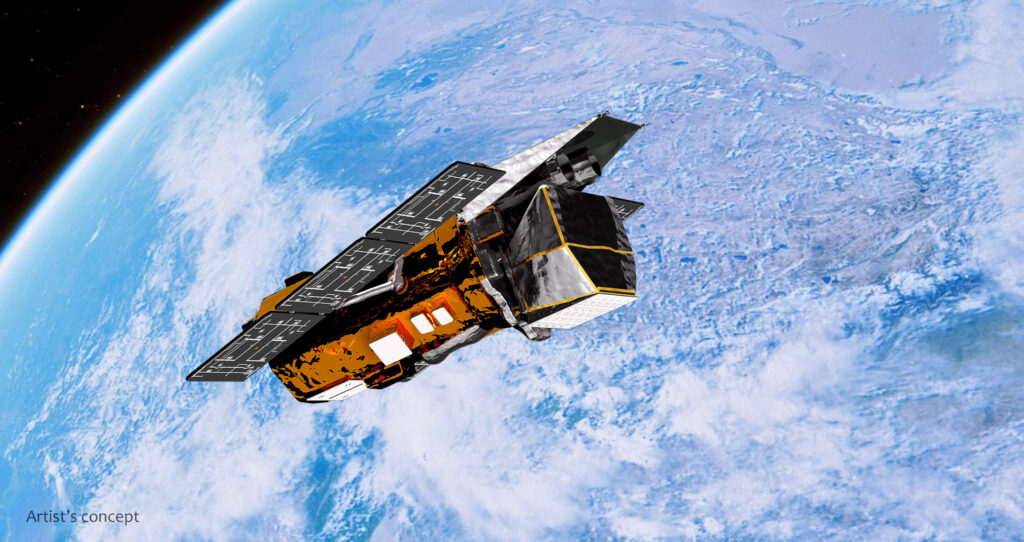
The brightest explosions in the universe are also among the shortest. A gamma-ray burst can flare and fade in less time than it takes to read this sentence, and the afterglow that reveals where it happened dims within hours. Catching one needs a telescope that notices fast and turns faster. For almost 22 years the Swift Observatory was that telescope, and on 23 October 2026 NASA announced that its science mission is over.
Nothing broke on board. Swift has no propulsion, so it has spent its life slowly sinking as the upper atmosphere drags on it, and recent solar activity, which heats and inflates that atmosphere, sped up the fall. On 20 October the spacecraft reached an altitude of 275 kilometres, could no longer hold steady against the drag and dropped into safe mode. Its operations team at Penn State then sent the command that ended operations and prepared it for re-entry, which NASA expects within the next few weeks.
Its design was a relay. Its Burst Alert Telescope watched roughly a sixth of the sky at once, waiting for a flash of gamma rays. When one arrived, the spacecraft swung itself round, usually within about a minute, to aim an X-ray telescope and an ultraviolet and optical telescope at the spot. Those two instruments pinned down the fading afterglow and passed precise coordinates to observatories on the ground. No human had to approve the turn. The machine simply went.
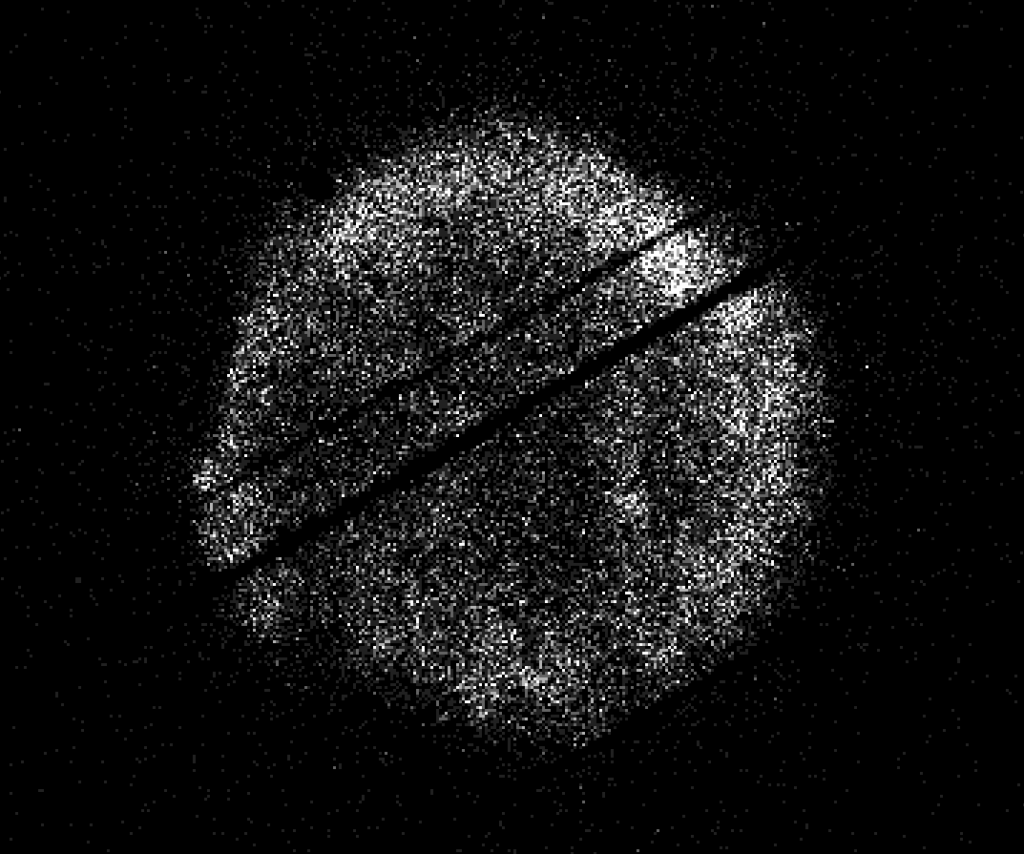
That speed paid off almost at once. Swift launched on 20 November 2004, and in May 2005 it caught GRB 050509B, a burst lasting about 0.03 seconds, collecting just 11 X-ray photons from its afterglow. Eleven photons were enough. It was the first short burst ever tied to an afterglow, and the observations backed the idea that short bursts are born when neutron stars, the collapsed cores of dead stars, collide and merge.
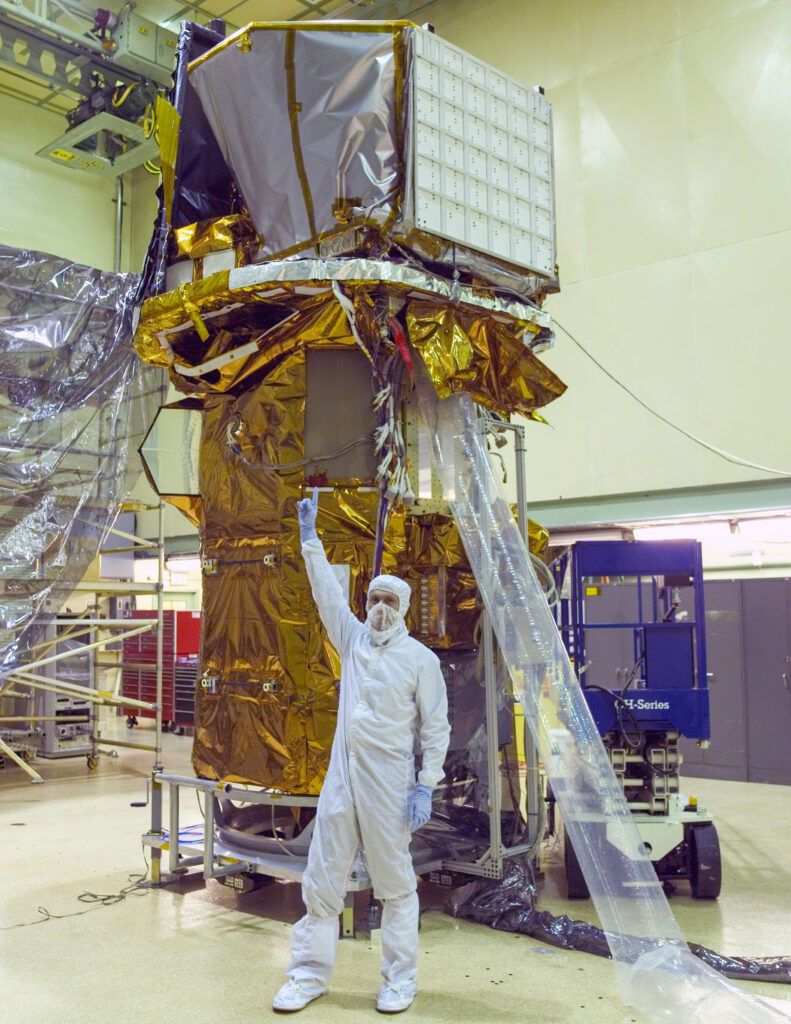
Built for a two-year mission, Swift ran for more than ten times as long. NASA counts more than 2,000 gamma-ray bursts, more than 1,400 supernovae and a share in about 7,000 published papers. It could schedule up to 75 separate targets in a day, which made it the instrument astronomers called on whenever something in the sky changed suddenly, from stars torn apart by black holes to passing comets. The mission was renamed in 2018 for Neil Gehrels, its first principal investigator, after his death.
A rescue was attempted, and its fate is the uncomfortable part of the story. In September 2025 NASA gave Katalyst Space one year to build and launch a spacecraft called LINK, catch Swift and lift it higher. To buy time, the team switched off the X-ray and ultraviolet telescopes in February 2026 and halted the burst detector in April, angling the solar panels to cut drag. LINK launched on a Pegasus rocket in July and soon struggled to control its orientation. Thruster burns slowed its spin from about nine degrees per second to under four, but on 19 August NASA and Katalyst confirmed that LINK would not capture or boost the observatory.
Swift then went back to work, knowing what it would cost. Every observation meant more drag, as the months spent in a low-drag stance had shown. The team chose the data anyway, and the spacecraft spent its last weeks observing hundreds of targets, from the debris of exploded stars to active black holes in distant galaxies. Below about 300 kilometres, NASA had warned, operating the telescope becomes difficult and the descent speeds up quickly.
The gap Swift leaves is real. NASA says it is now exploring commercial options and new missions to support rapid responses to sudden cosmic events, an acknowledgement that the job Swift did now needs a new owner. The failed boost also tested something wider: whether a commercial servicer could save an ageing science satellite quickly and cheaply. NASA itself called the attempt high risk and fast turnaround. This time the gamble did not come off, and the lesson for future missions is that a spacecraft without propulsion has a fixed lifespan written in the weather of the Sun.
Its data will outlive it. Swift leaves an archive of about 12 terabytes, including more than 1.5 million ultraviolet and optical images, that astronomers will mine for years.
Within weeks the observatory will fall through the upper atmosphere it spent two decades looking past. It will become a brief streak of light, bright and over in seconds. That is exactly the kind of event it was built to catch.
