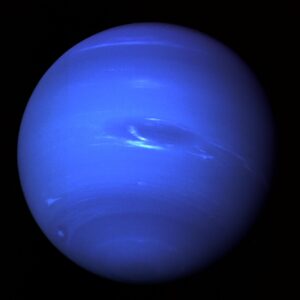
Out of Shape: Compressed Water Ice Loses Its Cubic Symmetry
Squeezed beyond 222 gigapascals between two diamonds, water ice abandons its neat cubic lattice, a complication for models of the water-rich interiors of Uranus and Neptune.


Squeezed beyond 222 gigapascals between two diamonds, water ice abandons its neat cubic lattice, a complication for models of the water-rich interiors of Uranus and Neptune.
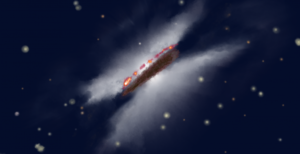
ALMA’s detailed new view of the edge-on cosmic hamburger disc reveals layered gas, lopsided dust and a sulfur arc that may mark a giant planet at its earliest stage.
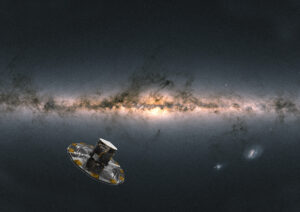
Precise ages for Gaia stars near the Sun suggest the Milky Way disc thinned rapidly in a turbulent youth, then switched to a slow, steady settling about 10.8 billion years ago.
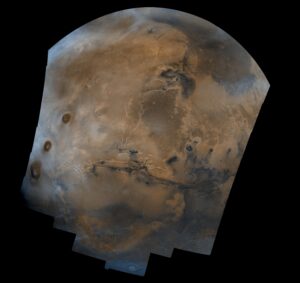
A single tremor recorded by NASA’s InSight lander in 2021 has been traced to faults 20 to 40 km beneath Valles Marineris, showing that the largest canyon in the Solar System is still geologically active.

Webb has measured the make-up of the gas swirling around Sagittarius A*, and found it rich in metals forged by the stars nearby. That matters for understanding why our galaxy’s black hole eats so little.
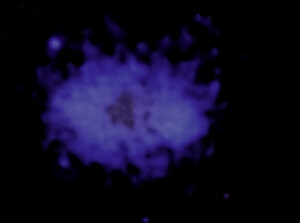
A radio source shaped like a treble clef, hidden behind the Milky Way, turns out to be a radio phoenix: debris from an old black hole outburst revived by colliding galaxy clusters.
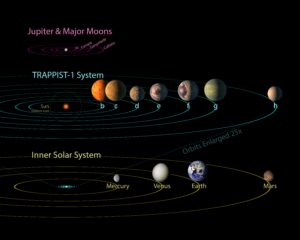
A Nature Astronomy study of about 300 multi-planet systems finds they split into two families, and the type of star at the centre appears to decide which one a system joins.
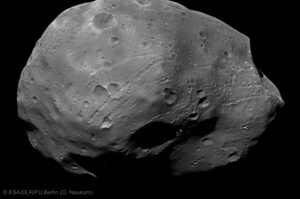
Japan’s MMX mission has launched for Mars, aiming to land on the moon Phobos and return at least 10 grams of its surface by 2031. The sample could finally show whether Mars captured its moons or made them.
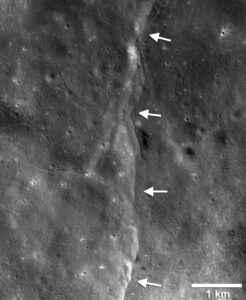
A new map of more than 10,000 young lunar faults shows the Moon has lost about 45 metres of radius in the last 400 to 800 million years. Because the Moon is a single plate, those faults, and the moonquakes they bring, can appear almost anywhere.
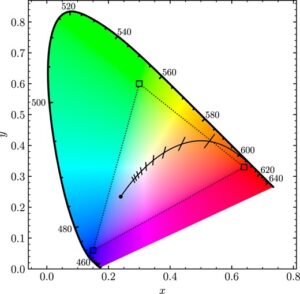
Dense atmospheres can tint dead stars pink, cyan and yellow, and one white dwarf would look green to the human eye. The average white dwarf, meanwhile, is simply white.